Friday, December 2, 2016

Image result for supreme court justices


President-elect Donald Trump has released a list of 21 potential nominees to the Supreme Court -- the people he choose to replace Justice Antonin Scalia and other potential vacant seats -- are a direct result of conservative casting.


The conservative casting comes from the fact that Trump has said that two deeply conservative organizations -- the Heritage Foundation think tank, and the Federalist Society legal organization, helped him compile his list for the vacant seat. This makes sense because they have been stronger supporters of his campaign during the time of the election, so he will need their support in order to effectively accomplish his list of items on his political agenda. Besides vowing to replace Scalia with an ideological twin, Trump has said that his pick will seek to overturn Roe vs. Wade and be a strong supporter of the Second Amendment.

If he chooses someone too far to the right, he risks more national and political conflict, Thus, it will endanger the effectiveness of his new presidency. Nominate a centrist, however, and Trump risks a backlash from the conservative organizations poised to play a significant role in his success -- or failure -- as the new president.

Lastly, the Democrats have said that they will filibuster Trump's nomination if they consider that person incompetent or too far right.

So a few questions particularly come to mind....

1) Who and how will Trump choose to fill the vacant seat in the Supreme court?
2) How will Trump find a candidate that both his conservative supporters and opposing Democrats find acceptable?
3) Will Trump actually pick someone from his list that he released? Or will he completely deviate from it due to his flip-floppy nature?
4) Trump has publicly stated that he really likes Scalia and vows to appoint someone in the "Mold of Scalia." Will he keep his promise? Furthermore, in knowing this, is it possible to narrow it down to a few judges from the list of 21? 


Monday, November 21, 2016

Trump's Pick for Secretary of State

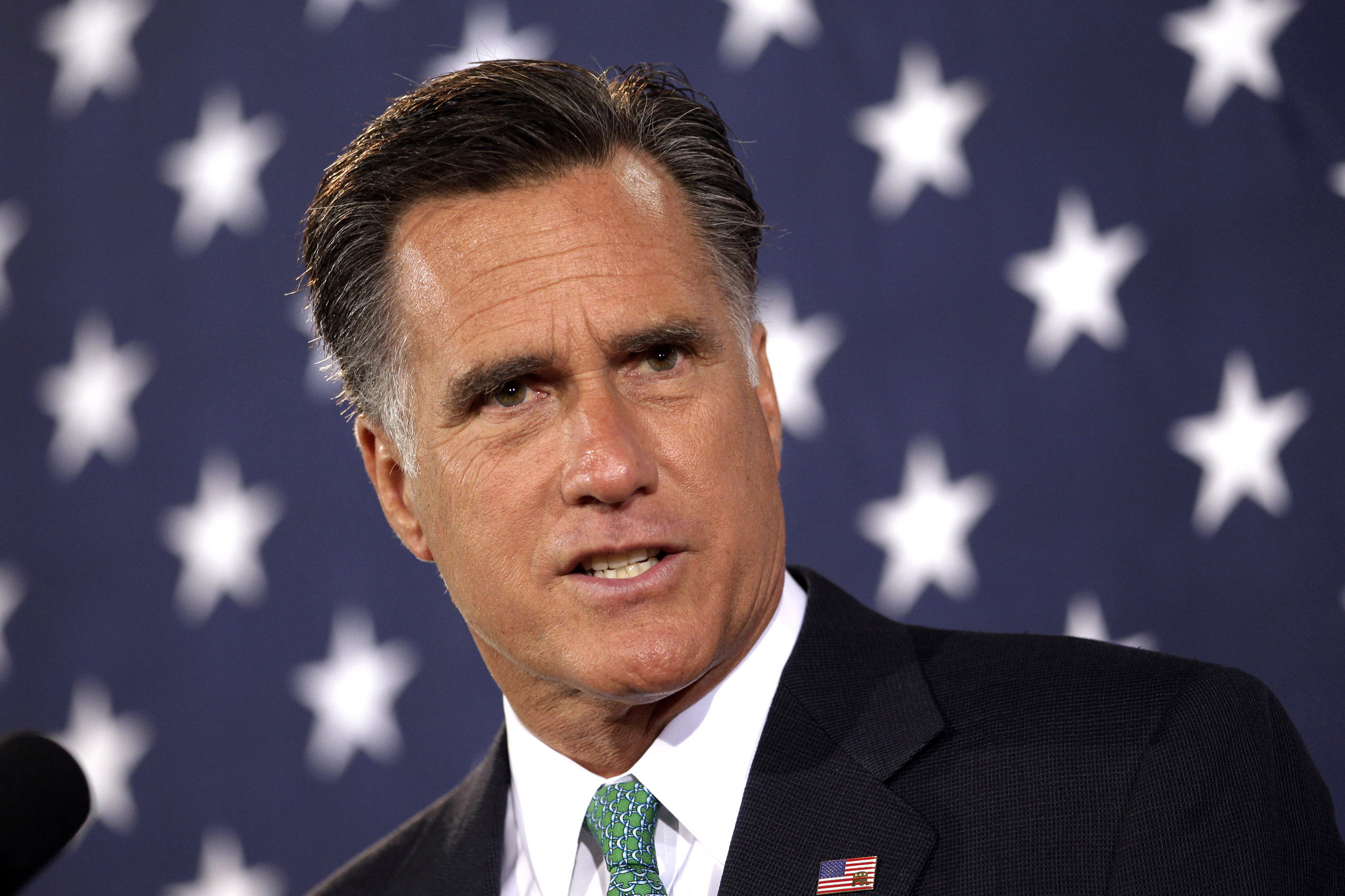
After securing the nomination for President, Donald Trump has been meticulously constructing his White House cabinet, to serve with him for the next four years. Guided by the insight from close advisers  and a transition team led by VP-elect Mike Pence (formerly Chris Christie), Trump has been appointing political allies and  Washington outsiders and insiders ( ex) Bannon and Priebus) to key positions. His pick for Secretary of State seems to be narrowed down to three men. One possible pick is, UN diplomat John Bolton; he is known to have a very hawkish stance with foreign policy and contradicts the isolation Trump called for during his campaign. Another pick is former New York mayor Rudy Guilliani, a close friend and ally of Trump. Finally, 2012 Republican Presidential nominee Mitt Romney is being considered for the position, even after he and Trump sparred during the election.

Questions to Consider

  1. Who do you think Trump will pick; would this pick contradict any campaign promises he made?
  2. What do these three picks hint of Trump's foreign policy?
  3. If Trump takes a more hawkish stance, how do you think Russia and China will react? How about if he takes an isolationist one?
Image result for Mitt romney


Wednesday, November 16, 2016

Female and Minority Representation in D.C. Post-Election

Somali Refugee Makes History in U.S. Election by DOUALY XAYKAOTHAO

Last Tuesday's election has proven to be one of the most momentous in all of our country's history. Some may argue that our country has taken a leap back, others say forward. Whatever your political views, it's important to recognize the key women who are increasing representation in politics as a result of the 2016 U.S. election. Some of these key women include the Catherine Cortez Masto (first Latina senator), Tammy Duckworth (first Thai-American female in Congress and first female senator to have seen combat), Kate Brown (first openly LGBT governor) and not to forget, Kamala Harris (first Indian-American senator) and many more.

Although, as of lately, Ilhan Omar has been making headlines as one of Minnesota's new lawmakers. She is the country's first Somali-American lawmaker and is also a former refugee.

Omar arrived in the United States with her family in 1995 as a result of the Somalian Civil War and spent 4 years prior in a Kenyan refugee camp. Omar's election has increased dialogue surrounding the current Syrian refugee crisis and the United States' role in harboring refugees. In addition, Omar herself is a Muslim and serves to disprove many of the false negative stereotypes that are commonly associated with being both a Muslim and refugee.

As of now, our country has become more polarized than ever in terms of ideological differences and perspectives. It's important that we recognize and celebrate the diversity that strengthens us in order to overcome the negative rhetoric that has been affecting minority groups across the nation as a result of the presidential election.

Image result for ilhan omar

Questions to Consider:

1.  In what ways does Omar's election contribute to the dialogue surrounding Trump's proposals condemning both refugees and Muslims?

2.  In regards to the electoral successes of the women mentioned, how do they help counterbalance the increase in conservative power in D.C. as a result of the election?


Tuesday, November 15, 2016

Living through the Aftermath of the 2016 Election

Over the past week I have struggled to find what words would be the most important to give to the people, granted that I am only speaking to a Government class. I believe that the effect of the this election has been larger than America ever imagined and it has been something that has simultaneously brought together and divided the American people in an extreme manner. Through social media and the news I have seen friends dispute about candidates and whether or not people should be scared. An interview with renowned writer Chimamanda Ngozi Adichie and Emmett Tyrell shows the differences that people see in Trump even after the election( https://www.youtube.com/watch?v=eloHoAvArCo ). Protests have arisen in large cities all over the country and there have even been walk outs at schools near us. While we are all entitled to our own beliefs and political standings, it is important to recognize what is at stake over the next four years.
The New Yorker has compiled sixteen essays that each focus on an aspect of Trump's soon-to-be Presidency and what that means for America. Since this article is long, I encourage you to focus on 2-3 topics. Toni Morrison discusses the growing white supremacy in our country and how that is killing the reality of America being accepting of minorities. Jill Lepore touches on the divisions of the people in America right now. Each author has something significant to say about the aftermath that affects every single citizen.
As you read, reflect!
1) What is one topic that is touched on that is most interesting/significant to you? Why? Why are the words powerful?
2) Do you believe that the political divisions in society will ease? Or will the opposition to the President-elect stay strong?
3) Thinking about our executive branch unit...How do you think Trump will handle the White House? How will he use his powers? Will his lack of political experience hinder his abilities?


http://www.newyorker.com/magazine/2016/11/21/aftermath-sixteen-writers-on-trumps-america#top


Monday, November 14, 2016

Prop 64(legalization of Marijuana) is passed!

Image result for legalization of weed californiahttps://ballotpedia.org/California_Proposition_64,_Marijuana_Legalization_(2016)


Prop 64 was recently passed within California, which allows adults that are twenty-one and older to use weed. Even though weed is legal, you still may not smoke weed while driving or have 28.5 grams on you. The Bureau of Medical Cannabis Regulation will manage or regulate marijuana use and enforce the law. On another note, the article stated "supporters for the prop raised 22.5 million dollars in contributions, while no on prop 64 had raised 2.1 million dollars." Additionally, a lot of tax money will be come in as a result of the legalization of marijuana. "Revenue from the taxes will be spent on drug research, treatment, and enforcement, health and safety grants addressing marijuana, youth programs, and preventing environmental damage resulting from illegal marijuana production." This displays how the tax money will be used wisely and how the benefits of legalizing marijuana are prevalent. 

Questions:

1. What are the consequences of using marijuana under the age of 21 or selling it without a license?

2. How will tax revenue be used?

3. How do you obtain the right to legally sell marijuana 

Wednesday, November 9, 2016

Which California Propositions and Local Measures Passed?


California Propositions and Measures Passed

On Election Day, registered voters in California voted on propositions covering a range of concerns in addition to the presidential election and state representatives from the House and the Senate. Some of the propositions that were passed are legalizing marijuana, raising the cigarette and tobacco tax by $2, tightening gun and ammunition restrictions, allowing multilingual education, speeding up the death penalty appeals process, and banning plastic bags. A controversial proposition that failed was Prop 61, which would have capped prescription drug prices. Although Pharma poured money into its opposition of the proposition, many people supported it in hopes that it would limit their prescription drug prices.

 Locally, people voted on measures based on the focuses of counties. As expected, Measure R (prop 18) was not passed. However, there are measures in other counties that were voted on and passed by the people, such as Los Angeles Measure HHH, which raised property taxes in order to fund homeless housing.

Paying attention to and voting for propositions is important because it allows different states to control their own legislation based on the general opinion of the people. In class, we discussed that the federal government has its enumerated powers in the constitution, but everything else is designated for the states (as stated in the 10th amendment), so we must use our right to make sure that our opinions are heard through the democratic process.

Questions to think about
1. Will legalizing marijuana will have any significant effects on California? What about the country?
2. What is the significance of having measures in individual counties?


Sunday, November 6, 2016

Did FBI Director Comey Ruin Clinton's Chances of Winning?

Just when we were expecting the October surprises to be over, FBI Director Comey publicly reopened investigations into Clinton's email servers 3 days ago. Characteristic of her entire general campaign, it seems that Clinton will constantly be burdened by the weight of FBI indictments and investigations into her private email server, despite being cleared of charges during the summer. As expected from an October surprise, the Trump camp jumped on the opportunity to drag Clinton through the dirt, and the new bombshell 'allegations' have effectively shrunk Clinton's chances of winning from 82.2% (prior to Comey sending the letter to Congress to 66.9% (November 6th) (fivethirtyeight.com).

However, will this 'October' (it's already November!) surprise sway voters so dramatically as to cause an upset come Tuesday? According to Enten, author of "How Much Do 'October Surprises' Move The Polls?", history shows that October surprises aren't the 'game-changers they're sometimes portrayed to be'. Yes, news of Bush's DUI may have caused the popular vote to swing Gore's way during the 2000 election, but Enten argues that this occurrence was anomalous when compared to other elections.

Despite historical data indicating that the FBI bombshell will not cause substantial damage to the Clinton camp, it wouldn't be difficult to believe that this will be another anomalous election in the history of American democracy. After all, this has been one of the most unconventional elections in modern American election history.

Questions to think about:
Do you think the FBI probe into Clinton's emails will cost her the election?
On Sunday, FBI announced that they have not found any incriminating evidence and are closing the investigation again. Does this revelation come too late, and will it play to either candidates' favours?
When do you think campaigns are decided? Months, weeks, or days before election day?


Burlingame divided over rent control: While opposing political factions collide, future of residents hangs in the balance.

Burlingame divided over rent control: While opposing political factions collide, future of residents hangs in the balance.

As Elections are only a few days away, it is crucial that we inform ourselves on local elections as well as national. One proposition facing controversy here in Burlingame is Measure "R." Measure "R" is the Rent Stabilization Initiative proposition that is described as "an ordinance to enact rent stabilization and just cause for eviction and repeal prior restrictions on the regulation of sale or rental price of real estate". Face value, the proposition sounds clear and beneficial, however, the measure is facing opposition from many Burlingame residents. Due to some ambiguity with the writing in the initiative text, many residents (both renters and lessors) have had concerns about the future of renting in Burlingame to be attributed with the passing of Measure "R."

Although the ordinance protects renters from facing unjust eviction and exponentially rising rental prices, it seems that the proposition features many aspects that would serve as a detriment to both renters and lessors. Removing the prior restrictions on the government's ability to regulate rental prices would provide some insurance for renters, however interrupts the renting market in Burlingame. With subleasing, there is an issue with the lack of rent control- this becomes dangerous as landlord's lose their ability to evict problematic tenants.

Questions to Consider:

1. Do you believe Roberston evicting his tenants prior to the  elections was a harsh overreaction or a justified business investment?
2. Do you agree or disagree with the notion that the rental protections (that could protect problematic/dangerous tenants from eviction) would be detrimental to the quality of life in Burlingame?
3. Is former Mayor Rosalie O'Mahony out of line for advocating against Measure "R"?
4. Do you see the "rent control board" referenced toward the end of the article as a fair and balanced form of representation for the desires of both landlords and renters in Burlingame?

Sunday, October 23, 2016


The social media platform has been growing exponentially since the last presidential election. Popular social media companies almost doubled in users and activity. This year's candidates for the Presidency are using this platform as an effective advertising outlet, saving their campaigns upwards of $100 million. Seeing as social media is easily accessible and used by millions of voters, candidates can send instant updates and advertisements, knowing that it can be widely viewed and shared. Candidates are taking advantage of this tool to reach out to various demographics of voters across the nation directly. The millennial generation, who will have a very important role in this year's election, are very involved in social media, and are an important demographic to reach out to. In recent polls, "44 percent of American adults have said they learned something new in the past week from social media."

Social media has turned into a popular news source, replacing many traditional news outlets. Though it is a good source of information by candidates themselves, it can also serve as a platform to spread false information, or immature content around the election. Americans have spent a collective amount of over "1,284 years reading about Donald Trump on social media". It is likely that a good portion of the information is inaccurate or construed to be comical or support his opponent. Trump's overwhelming presence on social media, though not always positive, has earned him the attention of Americans across the country. Though his opponent, Hillary Clinton, uses social media to reflect her campaign and ideals, she has received  far less of a reaction from voters. In fact, in this election people have paid more attention to Donald Trump on social media than Clinton and Sanders combined. 

I choose this article because we have been focusing on how media impacts campaigns, and for the first time, candidates are taking media into their own hands and outdoing traditional news sources. Social media is likely to become the future of all campaigning so, it is important to learn about the impact it is having on the election currently. 

Questions to consider:
  1. Do you think the power of social media is strong enough to differ voters away from broadcasted media indefinitely, in the future? 
  2. Is social media more effective than standard advertisements? Is it targeted to too specific of a demographic? 
  3. Does social media further risk statements and polls being construed? Is social media more or less trustworthy than a typical news source, such as television news, talk shows on the radio, and internet sources. Why or why not? 
  4. Do you think social media will be the sole source of advertising in the future? 
  5. Is all exposure good exposure? Does Trump's overwhelming presence on social media help or hinder his campaign? Is Clinton's more subtle approach more effective? 

Tuesday, October 18, 2016

Election Officials Brace for Fallout from Trump’s Claims of a ‘Rigged’ Vote

Election Officials Brace for Fallout from Trump's Claims of a 'Rigged' Vote

Republican nominee, Donald Trump, is claiming that there has been voting fraud in some of the current polls. He posted on Twitter saying that "there is large scale voter fraud happening on and before election day..." following his statement by asking why "Republican leaders deny what is going on?”  Clinton's Campaign Manager, Robby Mook, responds to Trump's actions by stating that he believes Trump knows that he is losing, as a result he is blaming the system for his loss. Based on the democratic campaign's analysis of early voting records, there was evidence showing that Clinton was leading in the polls. 

The Clinton Campaign has denied these allocations, claiming that they are false. The Clinton Campaigns has a network of trained lawyers, all of which are trained on how to handle possible situations of fraud and are instructed to immediately report delays and if need be, how to seek court action. They have also stated that they have increased the amount of lawyers and volunteers at  polling places in key battleground states. Furthermore, GOP leaders are worried that Trump's allegations have hurt the republican party and could jeopardize their representation in the senate. 

I chose this article because it talks about many of the sections we have learned about in class. For example, it touches upon the polling process and how the senate majority is important in government.  

Questions

  1. Do you think there is potential for voter fraud in the current election/polls? Why or why not?
  2. How do you think Trump's allegations will effect the republican or democratic party?
  3. What measurers should be taken to prevent future fraud or fraud allegations?

Thursday, October 13, 2016

The Women of the United States vs. Donald Trump

http://fivethirtyeight.com/features/election-update-women-are-defeating-donald-trump/


National polls in recent weeks have shown that Hillary appears to be leading Trump by a significant margin. Clinton appears to be holding somewhere between a 5 and 11 percent lead. This lead may be attributed to the bad publicity Trump has been receiving recently regarding offensive comments he has made about women in the past.

 Although Clinton is ahead in national polls which include men and women, she shows an outstanding lead in the polls where only women are surveyed. Hillary has achieved a lead of 33 percentage points over Trump among women. However, this extreme gender split goes both ways as Trump has secured a 11 percent lead over Hillary in polls surveying only men. A serious gender gap is forming between these two candidates.

If only women were voting, Hillary is projected to win as many as 458 of the 538 electoral votes. On the contrary, if only men were voting, Trump is projected to win as many as 350 electoral votes. There are obviously serious disagreements among the genders on the topic of who should be our next President. The fate of this election may very well rest on the candidate's ability to sway members of the opposite gender to vote in their favor.

Questions to consider:

1. Does the gap in candidate preference between the two genders in contribute to, limit, of have no     effect on democracy?

2. Is it still possible for Trump to win the election?

3. What strategies could be used to help candidates gain support from members of the opposite gender?


                           Image result for trump vs hillary political cartoon

Monday, October 10, 2016

How Body Language Determined the Second Presidential Debate

https://www.washingtonpost.com/news/the-fix/wp/2016/10/09/a-guide-to-body-language-during-the-debate/
http://www.nytimes.com/2016/10/11/us/politics/body-language-debate.html?_r=0

From the beginning of the debate to its conclusion, the two candidate's body language demonstrated the hatred the two candidates share. Trump crept closer and closer to Clinton while she was speaking until he was immediately behind her. Trump was attempting to dominate Clinton while she was speaking to control the people's attention even while he wasn't speaking. Trump's close quartering also could be seen as an attempt to threaten Clinton in an attempt to make her misspeak. Trump also had a common movement during the debate. He would pace back in forth in the background while Clinton would speak, likely trying to ease any nerves he had.

Clinton on the other hand, was very professional in the large majority of her mannerisms during the debate. While Trump attacked her husband for his misdeeds in office, Clinton kept aa blank expression in order to not show any reaction towards the hateful remarks made. In doing so, Clinton illustrated that her presidency would not have her husband's ghost and that she will be strong in the face of backlash by the people. Despite her vast experience, Clinton did make a small mistake during the debate. When speaking, Clinton looked down more than usual, showing that she was less prepared during the debate in comparison to the first debate.

Question to consider: Which candidate hurt themselves more with their body language during the second debate? Why?


Friday, October 7, 2016

How Hillary Clinton found her stride on gender

http://www.cnn.com/2016/09/27/politics/hillary-clinton-debate-gender/

Reporter Maeve Reston from CNN reports that Hillary Clinton has overcome the obstacles that arise with the potential of being America's first female President. Reston highlights Clinton's grace and maturity by demonstrating how she refrained from reacting to Trump in a way that would feed into female stereotypes. Reston recognized how careful Clinton had to be about every single movement and statement in order to prevent accusations that occur because of stereotypes. Reston continues by acknowledging how Clinton never "took the bait," compared to many of Trump's reactions. 

Gender is a very controversial issue during this election, for obvious reasons. It's unfortunate that Hillary Clinton has to "behave" so properly at all times, when Trump is clearly not restricted to these societal obligations. If Hillary responded with Trump-like emotion outbursts, she would be ridiculed. Women are already so underrepresented in politics. It is a shame that we make it so difficult for them to participate. 

Question to consider:
Should we implement laws to ensure that both genders are equally represented in politics? Why, or why not?


Sunday, October 2, 2016

Hillary's Immigration Policy

https://www.hillaryclinton.com/issues/immigration-reform/
http://www.politifact.com/truth-o-meter/article/2016/jul/15/compare-candidates-clinton-vs-trump-immigration/
Image result for immigration cartoons

One of Hillary's most recognized motives is that, "we are a nation of immigrants, and we treat those who come to our country with dignity and respect... we embrace immigrants, not denigrate them." Despite being a stereotype for racist profiling, the United States is modernizing immigration reform to further establish itself as a nation of opportunity and immigration. Hillary promises a path to full and equal citizenship within the first 100 days of her presidency, while also getting rid of the lengthy process for legalizing an immigrants status.

1) How likely is it that Hillary will truthfully make a change offering citizenship for immigrants?
2)How does she plan on upholding the law while also monitoring immigrants?
3)Hillary plans on getting rid of the 3 to 10 year process for legalizing an immigrants status. How can she get Congress approval?
4) How will Hillary naturalize immigrants into an American society?

Friday, September 30, 2016

The Implications of the Congressional Override of President Obama's Veto

Image result for immunity cartoon 9/11
New York Times Article

Summary:
For the first time during his two terms in office, Congress has overridden a veto made by President Obama against a bill that would allow families of victims of the 9/11 attacks to sue the Saudi Arabian Government.  Although it has been stated by the 9/11 Commission that the government had no involvement in the tragic events, the royal family is in question for having funded the Al Qaeda organization that orchestrated the attacks.  The unanimous vote to override the presidential veto allows the bill to pass into law, effectively amending a 1976 law that grants foreign national governments immunity from lawsuits in US federal courts.  This event poses a threat to the US government because it has set the precedent for foreign citizens to sue the US government under similar circumstances.  Families of those killed by American soldiers in Iran, Iraq, Afghanistan, and many other countries may attempt to sue American soldiers for killing their family members in their respective countries.  All these potential threats beg the question: Was the override a mistake?

Questions:
What could be some domestic consequences of the Congressional Override?
How might the Saudi Arabian Royal Family have contributed to the events of 9/11?
To what extent does this bill set a "dangerous precedent"?
To what extent does this bill represent a setback for the Obama Administration?


Sunday, September 25, 2016

New Identity Politics Based on Race and Class

Link: http://www.nytimes.com/2016/09/02/opinion/identity-politics-run-amok.html?rref=collection%2Fcolumn%2Fdavid-brooks&action=click&contentCollection=opinion&region=stream&module=stream_unit&version=latest&contentPlacement=6&pgtype=collection&_r=0
Article Summary:
David Brooks asserts that Identity Politics are dominating this year's election.  The election is divided along cruel identity lines- race and class. As a newcomer to politics, Trump epitomizes this style of campaigning. His campaign is defined by two motifs: that the American gov't is in the grips of a rich oligarchy (elitism) that distorts everything for its benefit; that the American people are besieged by foreigners, who take their jobs and threaten their lives. Trump takes these ideas and manipulates them to make it seem as if the world will end if the U.S. does not restrict immigration or reduce the influence of the rich.

Identity politics distorts politics in two ways: it cleanly divides the world into opposing forces of light and darkness. Are you a worker or an elite? Are you an American or a foreigner? Trump tries to reduce the election to these two questions which displays the intellectual laziness of many white Trump supporters because they are influenced by him and help spread his ideology.


Brooks claims that,"Identity politics, as practiced by Trump, but also by others on the left and the right, distracts from the reality that we are one nation. It corrodes the sense of solidarity. It breeds suspicion, cynicism and distrust. Human beings are too complicated to be defined by skin color, income or citizenship status. Those who try to reduce politics to these identities do real violence to national life."


Questions to this consider: 
1. How is Trump experiencing so much success with this form of politics? 
2. Is this election about the lesser of the two evils-does Hillary's controversial past drastically help Trump and his constituency? 
3. Are Americans sick of the Clintons and patronage (Democrats constantly promoting Clinton and we also had two bushes and now we may have two Clintons)? 
4. Do Americans like Trump because he can be viewed as entertaining and inspirational while Hillary is often portrayed as old and boring and more importantly as a liar? 
5. Are Americans able to forgive Trump's statements regarding women and Mexicans that can be viewed as misogynistic and racist because they do not want a liar as president of the U.S.? 
6. Does Trump have more values in common with the average American than Hillary because he can be viewed as honest and someone who speaks his mind? Although he may be factually incorrect, Trump is able to simplify issues, say what most people have been afraid to say; people are also sick and tired of our political establishment system.
Please comment on Hillary v. Donald. Happy debating on Monday Night!
Thanks.

Saturday, September 24, 2016

Democrats advice: "Let Trump screw up". Why this is bad advice (from a Democrat's perspective)

As a self proclaimed Democrat, I often reflect on the 2016 presidential election race and find myself asking: How did a misogynistic, racist, and ultimately unappealing candidate- I'm talking about none other than Donald Trump- make it this far in the race? A 2000 episode of the Simpson's- set in an America that had gone insane- predicted it correctly, that Donald Trump would not only run but that he would be very, very close to the presidency.

I disagree with Trump's beliefs about immigration and gender, amongst a breadth of other topics. But I must admit, that Donald Trump is a powerful speaker- he is loud, arrogant, and boastful, and that resonates with people. Trump preys off the fear of those who feel displaced by an increasingly diverse, multicultural society. He, in essence, speaks loudly for those who cannot speak for themselves. In our first period class, we even discussed how some believed that Trump employs methods similar to a hypnotist.

Recently, Democrats were reported to have given Hilary Clinton some satirical advice: "Let Trump Screw up." I pray that she does not take this advice. We have given Trump months now to "screw up," and even though we may perceive Trump's comments as inaccurate, racist, and misogynistic, he finds himself right with Hilary Clinton, in a close race for the presidency. Mrs. Clinton, poke holes in Trump's ideologies- about the effectiveness of building a wall, the absurdness of restricting Muslim movement into the US, his economic policies. But please, do not let Donald Trump dominate the conversation, do not let him bully you into silence and harness the spirit of the people.

Win it...

Thursday, September 15, 2016

Realignment - Maybe not Mr. Brooks

Image result for hillary vs. bernie democratic party cartoon

David Brooks' Realignment Won't Happen by David Atkins - Washington Monthly


Summary:

David Brooks correctly asserts that there is a comfortable "upper crust" benefiting from globalization and increases in asset prices, while a large set of middle and working castes experience a decline in wealth.  Atkins explains that Brooks expects the "great faction of millennials and workers of all races" to join Republicans while Democrats secure the support of Silicon Valley and Wall Street. However, Atkins points to the social and neurological factors that lead to the general liberal or conservative tendencies and how these feelings are stronger than any immediate response to economic anxiety.  As such, there will be no major party realignment.  In fact, Atkins expects the Republicans to create a happier version of the race conscious economic protectionism that clings to a reactionary belief in the good old days.  The Democrats will have to deal with an intra-party struggle between the progressives and the "establishmentarians."  If Atkins is correct, the Republicans will become a "regional minority party" because the demographic shifts do not favor their base, while it remains to be seen whether Wall Street or Main Street will prevail amongst the Democrats.  

Questions:
Do you think that how our brains respond to certain stimuli can predict our political identity?
How much of a factor is race in this situation?
What is the most or least compelling part of Atkins' argument?
What will happen in the future to the parties?


Realignment In the Near Future?

Image result for realignment election southern

Time for a Realignment? by David Brooks, New York Times

Summary:

David Brooks claims the unpopularity of Trump and Clinton is not what is making this election a transformational moment. Existing partisan mentalities are dying out and the current social divide will likely lead to some sort of party realignment in the near future.  Brooks says "the molten core of the Republicans is the dispossessed" while the Democratic core consists of the "coastal professional class."  These disparate groups have a huge trust gap in terms of trusting their neighbors, governmental institutions and surely the 21st century global economy.  If certain groups within each party, minority dispossessed Democrats and Republican professionals, recognize the molten core does not reflect their values, one can expert some party realignment.  For example, the Sanders Democrats and Camber of Commerce Republicans will not stay with their respective parties if the party leaves them ideologically.  According to Brooks, this is likely given the fact the social, mental and emotional gap between the core groups will widen.

Questions:

Is David Brooks' bold claim accurate?
Can the Republican Party gain popularity with minority voters, especially if their message focuses on struggles in response to globalization?
Can the Democrats balance constituencies such as upper income professionals who have benefited from the 21st century global economy with the millenials who will graduate will record levels of student debt?